
Podcast: Play in new window | Download
Subscribe: RSS
Today the Rialto Report re-visits our relationship and the various interviews with Ray Horsch, the subject of a ongoing murder investigation.
This isn’t a normal Rialto Report series: needless to say, much of it is disturbing. If this isn’t for you, we get it. We’ll return to more typical content soon. You won’t have to wait long, we promise.
In the meantime, If you know any information that may relate to the ongoing investigation, please contact Detective Joseph Murray, at the Homicide Division of the Philadelphia Police Department, at (215) 686 3334.
Please note that all unauthorized reproduction or use of the audio in this podcast is strictly prohibited.
This podcast is 32 minutes long.
——————————————————————————————-
Let’s start with the facts.
June 19th, 2026, and a seemingly routine traffic stop in Philadelphia.
U.S. Park Police pulled over a black BMW driven by 44-year-old Eugene Horsch. Inside the car with him was a female passenger. She appeared terrified, and told officers that Eugene was going to hurt her.
The officers searched the vehicle and found two loaded firearms with obscured serial numbers, roughly $8,000 worth of narcotics, and a counterfeit DEA badge featuring Eugene Horsch’s photograph.
The frightened female passenger gave police her ID card that turned out belonged to another woman, Blair Tonzelli, who’s been missing for over three years.
The woman admitted she didn’t know Tonzelli but that she feared Eugene had harmed people. She told police she was afraid of Eugene because he’d bragged about knowing how to use chemicals to dissolve human remains.
Armed with this evidence, Philadelphia Police raided Eugene’s home on West Chew Avenue later that day. They reportedly discovered a second illegal firearm, an FBI badge with Eugene’s picture, and an extensive indoor marijuana-growing operation. They also found five urns filled with cremated remains and a 55-gallon drum directly connected to the basement plumbing.
An expanded joint local and federal law enforcement raid followed. While the initial investigation targeted Eugene Horsch, detectives uncovered a mountain of graphic evidence that traced directly back to his father, Raymond Horsch. This included hard drives containing over 600,000 images and 70,000 videos, which allegedly link several missing women to the house on West Chew Avenue where Raymond and Eugene lived. In late August 2026, investigators revealed that one of the videos allegedly showed Raymond strangling an unidentified woman to death inside the home.
*
I knew Ray Horsch. Or at least, until recently, I would have said that I knew him.
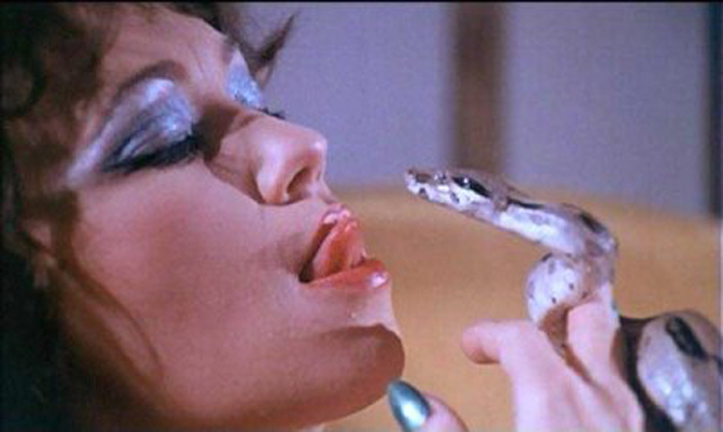
I first contacted him because he directed an obscure, cult adult film, The Erotic Memoirs of a Male Chauvinist Pig, back in 1973. I visited him at his home in Philadelphia. I spent time with him. I spoke with him at length, on and off microphone, I corresponded with him, interviewed him on several occasions over a twenty-year period, and filmed him at his home. And it is extracts from those conversations that I’m sharing here in a short series of podcasts.
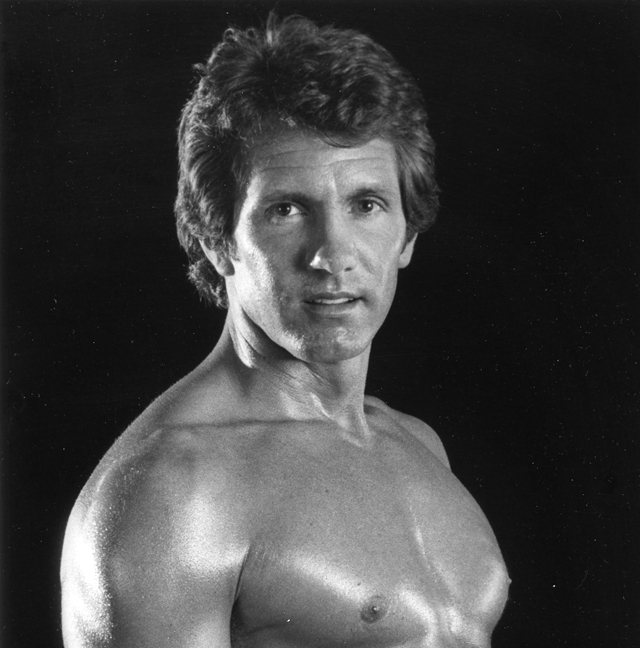
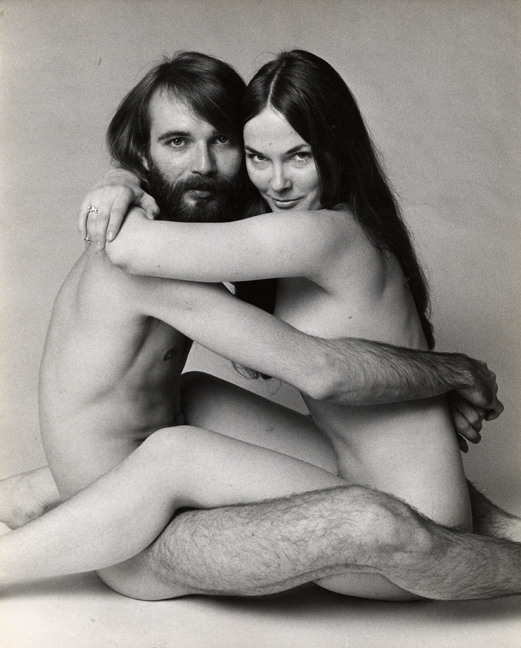
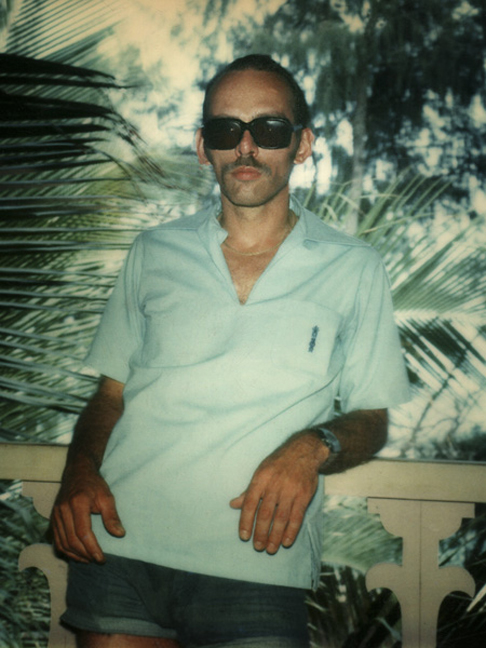
Ray Horsch died in 2025 at the age of 82. He was an artist, a photographer, a filmmaker, and a relentless provocateur. Much of his work existed deliberately at the uncomfortable intersection of art and pornography, fantasy and autobiography, lust and violence. Some people admired it. Some found it exploitative or misogynistic. I know I often found it extremely difficult to look at.
None of his work was a secret. What may have been secret is something altogether different and more sinister.
In the summer of 2026, this extraordinary police investigation began unfolding at the Philadelphia house where Ray and his son had lived. The investigation is continuing. An enormous amount remains unknown.
This series is not an attempt to solve that investigation.
And these interviews are not evidence of Ray Horsch’s guilt – or otherwise.
They are something stranger, and perhaps more unsettling.
They are conversations with a man I thought I knew, recorded before I had any idea that allegations like these would one day be made about him.
Listening to them again now is a different, and disturbing, experience.
There is a temptation, when something terrible comes to light about someone we have known, to reconstruct the past so that everything suddenly becomes a clue.
The peculiar comment we didn’t think much about.
The story that now sounds different.
The joke that suddenly seems sinister.
The moment when a follow-up question was left unasked.
Memory becomes contaminated by what we know now. And hindsight can make the unknowable seem as though it should always have been obvious.
I want to resist that temptation.
I don’t want to pretend that I understood things then that I didn’t. I don’t want to turn every sentence Ray spoke into a confession, or every disturbing element of his work into evidence of something that has not been proven.
But neither do I want to pretend that these recordings sound the same to me today as they did when I made them.
They don’t.
And that leaves me with questions that extend beyond Ray Horsch.
How well do we ever really know another person?
When someone tells us who they are, what exactly are we being shown?
A confession?
A performance?
A carefully constructed persona?
Or simply the version of themselves that they have chosen for us to see?
Ray was particularly complicated in this respect. He delighted in obscuring the boundary between fact and invention. He cultivated an extreme persona deliberately designed to offend, and it was often difficult to differentiate between Ray the transgressive performance artist and Ray the man. If indeed there was a difference.
When I met Ray, that ambiguity was part of the fascination of talking to him.
Today however, it feels very different.
But there is another consideration that is far more important.
At the heart of the investigation surrounding Ray’s former home are not stories, photographs, films. or provocative artistic ideas.
There are women. Real women who are unaccounted for.
There are families who have lived for years with absence, uncertainty, and grief, many still waiting for answers.
I’ve been horrified at what the investigation has found – and the continuing revelations that emerge on an almost daily basis. Horrified for the victims and their families. And horrified that anyone could be capable of such depravity. I’ve been in touch with the Philadelphia Police Homicide Unit detectives in order to turn over all materials relating to Ray that may be helpful to their enquiries.
I am conscious that turning this story into entertainment—or treating those women’s lives as scenery in the story of a possibly murderous man—would compound a grave injustice.
I’ve also asked myself whether releasing these interviews gives Ray exactly what he always wanted: another audience, another opportunity to shock, another chance to make himself the center of the story.
Perhaps it does.
But suppressing these conversations would create its own kind of falsehood. They happened. They are part of the historical record. And heard carefully, rather than sensationally, I think they reveal something worth confronting: how partial our understanding of another person can be, even when we believe we know them well.
So I wanted to return to them—not in search of a revelation hidden between the lines, and not to force the past into a story that has yet to be proven.
I wanted to hear the man I knew then through the knowledge I have now, and confront the uncomfortable space between the two.
I thought I knew Ray. Now it feels like I’m unknowing him, undoing the process of knowing him, and replacing it with a new perception.
*