
Podcast: Play in new window | Download
Subscribe: RSS
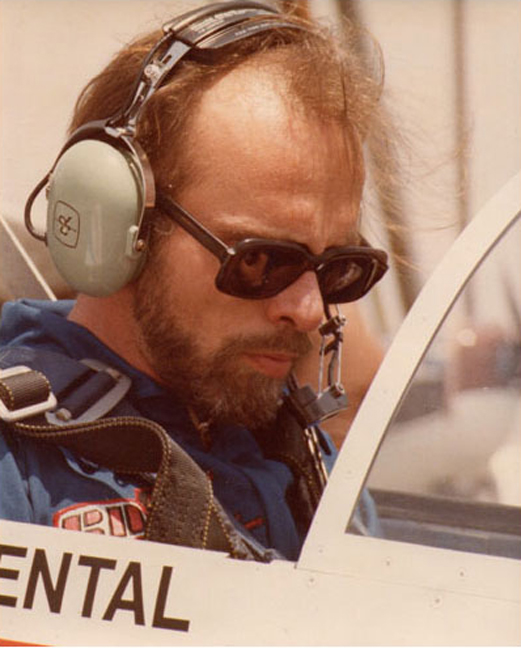
A few years after first meeting Ray Horsch, I returned to his home in Philadelphia to film an interview with him.
It was there, and in subsequent visits, that I met a number of people who knew him: filmmakers, artists, a number of women who moved into his house for varying periods of time.
I also met his former wife Amy McHale with whom I corresponded for a while.
It was only this year, I learned that Amy had disappeared in 2016.
At the time of this recording, what happened to her remains unresolved, and her disappearance has become part of the wider investigation now involving Ray’s former Philadelphia home.
*
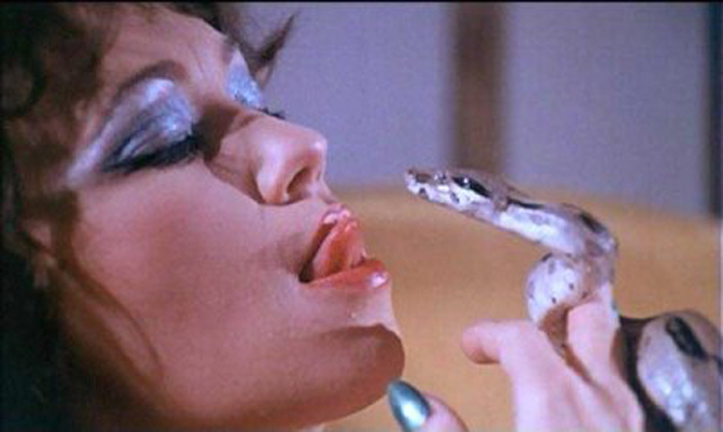
In the first two episodes of this series, Ray spoke about the first thirty years of his life—a strange, frequently improbable story involving underground films, Sesame Street, Times Square sex shows, pornographic films, counterfeiting, drugs, and even working undercover for the CIA.
It was bewildering enough. But Ray’s story was about to enter a different territory.
If you know any information that may relate to the ongoing investigation of Ray Horsch or his son Eugene, please contact Detective Joseph Murray, at the Homicide Division of the Philadelphia Police Department, at 215 686 3334.
You can listen to the first part of this series here and the second part here.
Please note that all unauthorized reproduction or use of the audio in this podcast is strictly prohibited.
This podcast is 38 minutes long.
—————————————————————————————————————————
After I first met Ray at his Philadelphia home, the visit I described in the previous episode, we stayed in touch. And over the next twenty years, we saw each other, spoke, or corresponded on a fairly regular basis.
Mostly, Ray wanted to talk about his work.
He was constantly producing photographs, films, videos, and art, and he liked showing them to me to see what I thought.
I found a lot of it visually accomplished. The composition, lighting, and art direction could be striking. Much of it was nudes. Abstract black and white pictures. But some of the subject matter was disturbing. Photographs of drug users shooting up. Increasingly, Ray himself appeared in the work. In one video he was pleased with, he lip-synced to a heavy-metal song called ‘Hershey Highway’ while having sex with a model.
I told him some of his work made me uncomfortable. That his overwhelming desire to provoke sometimes obscured whatever else he was trying to say. That ultimately, I thought it was detrimental to his art.
Ray seemed pleased.
Because, as I’ve said in previous episodes, upsetting people was, to some extent, the point. But it does raise the question: when somebody spends years deliberately presenting themselves as dangerous, transgressive and morally outrageous, how seriously are you supposed to take them?
And what if performance stops being performance?
At the time, my own interest in Ray remained largely historical. I wanted to hear about his life in New York in the early 1970s, so I suggested filming an interview with him. Ray loved the idea. So I went back to his Philadelphia home with a rudimentary camera, microphone and lighting setup – and I filmed him.
Several things about that day have stayed with me.
The first was how carefully Ray constructed the image he wanted the camera to see. It was meticulous. He fussed over the framing. There were books positioned behind him—Stephen King, John Updike and others. Two dolls were placed in the shot: one a mermaid, the other with conspicuous pubic hair. But the object Ray cared about most was a large black-and-white photograph of his mother as a young woman. He wanted it prominently displayed. He also insisted on sitting on a throne rather than an ordinary chair. And, naturally, he put on the eye patch.
At one point he picked up a white cat, looked at the scene he’d created, and observed with satisfaction that he looked like a movie villain.
That was Ray. He understood the power of the image perfectly.
What surprised me was what happened when I switched the camera on. Until then, he’d been animated—an energetic man in his early seventies bouncing around the room in black clothes. The moment we began recording, he changed. His voice dropped. His manner became solemn. Deliberate. Almost theatrical. Another Ray appeared. I remember noticing it at the time. It was another example of Ray’s life being a performance.
After I finished filming him, I stayed for dinner. His house was rarely quiet. There always seemed to be people coming and going.
People like John Butterworth who I met there several times. John was an old friend of Ray’s with whom he’d made the film Erotic Memoirs of a Male Chauvinist Pig back in 1973. John later went on to produce his own porn film The Naughty Victorians, a couple of years later, one of the more successful adult films of the mid-1970s.
I also met Neville Chesters there, another longtime friend, who’d been the road manager of Jimi Hendrix and The Who in the 1960s, before later making his own pornographic films using the name Neville Chambers.
Ray’s son Eugene was around too. He was quiet and shy, and kept to himself, sometimes cooking for us while we talked. I spoke to him a little, and could see that Ray was obviously highly protective of him.
And then there were women. Different women seemed to pass through the house on different visits. Ray told me that some had struggled with drugs or prostitution, and that he tried to give them somewhere safe to stay while they got their lives back together.
At the time, I took that explanation largely at face value. Now, I find myself asking what I should have thought.
Was there anything inherently sinister about what I saw? No.
Did aspects of it seem unusual? Certainly.
But unusual was almost Ray’s natural state.
And that is one of the problems with looking backwards: once you know that something terrible may have happened, ordinary memories begin to reorganize themselves. Details acquire potential significance they didn’t have before.
And one of the people I met at Ray’s house was Amy McHale.
Amy was there frequently during the years I knew her. She was bright, funny, and immediately likable—usually the warmest presence in the room. She told me that she and Ray had been married for several years and later divorced, but that they had remained close. When I first met her, she was in her thirties and said she’d recently returned to school to study law.
Her relationship with Ray certainly seemed unconventional, not least because of the considerable difference in their ages, but there did seem to be an affection between them. She made fun of Ray in a gentle manner. I remember her listening to one of Ray’s tall tales, and she laughed – and said to the group: “Ladies and Gentlemen – that is our dilemma: do we ever know when Ray is telling the truth?”
Amy had an enthusiasm for life that was infectious. I liked her. We corresponded for a few years. She would tell me about herself, her aspirations, her school work, or the cats. She’d update me about Ray’s work, his latest exhibition, or whatever new photography project he was working on. She was good company, not demanding or needy, and open and friendly.
But there was another recurring theme to my communication with her: Amy would repeatedly say that she wanted me to understand something about Ray. She told me not to confuse the character he projected with the person she believed him to be. Not to be fooled by the dark, mysterious person he tried to be. She even left a public comment on my website saying this, and in one email to me she wrote the following:
“I’ve known RC for over a decade and was married to him for three years. I want to say most is that RC is nowhere near the evil person he makes himself out to be. Life with him was mostly an adventure. He was always bringing home stray women like some people bring home stray cats. I never knew who I would wake up with us in bed in the morning. Don’t fall for his manipulation. He just tries too hard. LOL”
For a few years, Amy and I stayed in touch. Then the correspondence gradually stopped. I didn’t think much about it. I assumed she’d moved on. I continued seeing Ray from time to time, but Amy was no longer part of the scene.
It was only this year, I learned that Amy McHale had disappeared in 2016.
At the time of this recording, what happened to her remains unresolved, and her disappearance has become part of the wider investigation now involving Ray’s former Philadelphia home.
I look back at the correspondence I had with her. How much was Amy being manipulated into telling me what she did? In fact, I wonder now, was that even Amy who was writing to me?
*