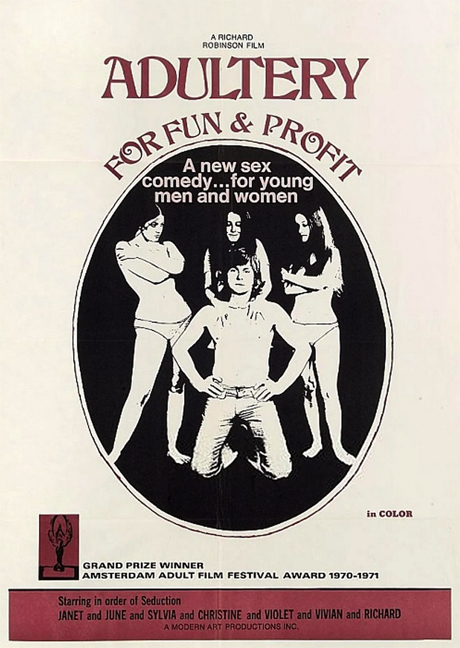
The Rialto Report has long been fascinated with the short film career of west coast director, Richard Robinson, which included early relationship-oriented XXX films like Adultery for Fun & Profit (1971), Is There Sex After Marriage (1973), and Marriage and Other Four Letter Words (1974).
His Los Angeles-based career also included westerns – and culminated in a cult Southern hickspoitation film, Poor Pretty Eddie (1975), that starred Shelley Winters and was financed by organized crime boss, Michael Thevis. That latter effort seemed to mark the end of Robinson’s directing career – but was there any truth in the rumor that he continued working as a writer, co-writing Joe Dante’s ‘Piranha’ (1978)?
When we learned that Robinson had died in the 1990s, we contacted his frequent leading actor and collaborator, the sparkling Rainbow Robbins, only to find she had been married to him.
This is her – and Richard’s – story.
———————————————————————————————————————————
1. Rainbow Robbins: Beginnings
Where were you born and brought up?
I was born at Newton Wellesley Hospital in Newton, MA. When I was ten, my parents moved us to southern California – first to Altadena just north of Pasadena, before we moved to Glendora, east of Los Angeles, where I went to junior high and high school.
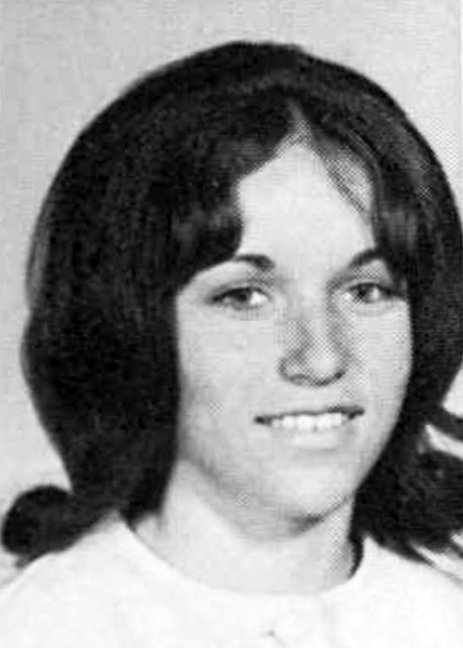 Rainbow Robbins, high school
What’s your family background?
My parents were patient, loving, and amazing.
My mother was born in France, and her family moved to England. Her father was a famous dentist in Europe who treated royals and dignitaries like Saudi sheiks. But her mother, my grandmother, became a gambling addict and took her own life – so her father moved the family to Boston, U.S.A, when my mother was a teen.
My father was the East Coast rep for Guinness – I remember we used to have cases of Guinness stored in our basement and when the weather got bad, the bottles would pop their caps and we’d hear loud noises coming from the basement. We’d head down there to find a big sticky mess.
Later, my dad became a sales rep for Ma Bell’s Yellow Pages – a job he liked, but they wanted to transfer him to Utah. He visited Salt Lake City to check it out, and decided we wouldn’t fit in there as the entire state was almost all Mormon at that time. So he changed jobs, first becoming a sales rep for L.A. Supply Co. and then at age 62 he started his own industrial supply company. I thought he was so brave to do that; thankfully, that business did quite well.
Did you have any siblings?
I have one brother who is four years older than me. We were close growing up, but I realized when I got older that since I was the youngest… and a girl, my parents seemed to favor me over him. He often got blamed for things that I did – like when, as a kid, I threw my shoe at him and broke a lamp. He never said anything because he was, and still is, such a good brother. He’s still always there to help me when I need it.
What were you like as a girl?
I was a girlie-girl who was interested in school and got straight A’s. Some of my junior high classmates said that I was “whiney” – especially one bully who said she was going to corner me in the girls’ bathroom and beat me up. As she approached me, my mind flashed to a TV show I’d seen where the lead character was attacked by a bully and simply grabbed the girl’s arm and twisted it behind her back. So that’s what I did… even though I didn’t really know how and had never done it before! It worked, and she never bullied me again.
What was the transition from girl to young woman like for you?
Just before I hit puberty, I felt geeky and awkward. I developed an inferiority complex and really couldn’t understand how my parents could love me. But I outgrew that when I became a teen and started feeling ‘pretty’ again. Dating gave me more confidence and, although I was still somewhat of an introvert, I felt much better about myself.
What were your professional aspirations when you were young?
I wanted to be a doctor – either a pediatrician or a brain surgeon.
How did you meet Richard?
I met him at something called the Teen Canteen in Azusa, California. It was a dance thing they had every Saturday night. All the girls at my high school were talking about the new guy from the school in the next town over. He was really good looking and a surfer – surfers were just becoming a thing at the time – and he dressed the part. He was also a good dancer and knew all of the latest dance moves. Later, when we became a couple, we went on a TV dance show called the Wink Martindale Dance Party.
Was Richard’s real name Richmond?
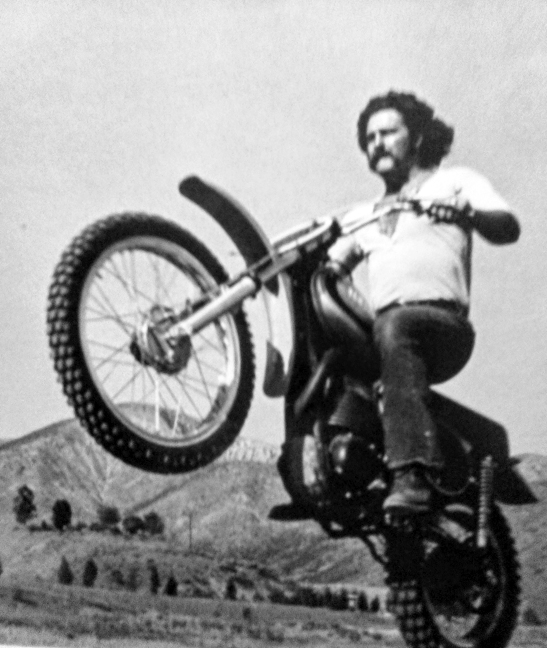
Yes – his legal name is Richmond Sherman Robinson, Jr., named after his father. As a little kid they called him Dickie. As he grew older, he hated his name so he changed it to Rick and when I met him he was Rick Robinson. And then later, when he got into the film business, he decided Rick wasn’t dignified enough… so he changed his name to Richard.
Much later when he was on a business trip with his agent in Sweden, he met this young tennis pro and he began playing tennis. He’d grunt when he played so the tennis pro started calling him ‘Thunder Bear’ in Swedish. After that, he preferred to be called Bear – and so he was Bear for many, many years. We later named our yacht ‘Thunder Bear.’
Was Richard from West Virginia?
He was. He was born in Charleston, West Virginia, in a neighborhood called Dogtown. His father was dirt-poor but his mother’s family was rich. So of course… that was a marriage made in hell and the families weren’t real thrilled with it.
Later his family moved to California – they lived in Baldwin Park, east of Los Angeles, and then in Covina. Richard had four sisters and one brother. His father owned an appliance repair shop that he ran out of their garage. His mother assisted his father with the business and she was strong: she could lift washers and dryers with the best of them. She was amazing!
What attracted you to Richard?
He was extremely charming and a smooth-talker – which was something that I believe was the key to his success throughout his life. I came to realize later that his charm may have been hiding some deeper and darker issues.
It wasn’t long after we met that we became inseparable. I couldn’t stop thinking about him – I was in love. I still wanted to go to college and then medical school – but instead I got pregnant so we got married. Teenage pregnancy changed all my plans…
What year did you give birth?
We had our son in early 1964 when we’d already moved to Covina, CA. Rick, as we called him then, was working for an optical company at the time, and I became a stay-at-home mom, except for a part-time job working for my mother’s boss in her gift shop.
What were Richard’s plans when you met him – was he an aspiring filmmaker?
No, not at all. Film was all accidental. He had civil jobs early on, like working for the Simi Valley Sanitation department. He actually wanted to be a fireman but didn’t have time for the extensive training involved. In fact, he was a volunteer firefighter for a while when we lived in L.A.
Where did you and Richard live in the very beginning?
We moved in with his parents in their big house in Covina. They gave us the upstairs where we had a bedroom and another small room that we made into a TV/sitting room. We set up the nursery in our bedroom, and Richard’s sisters served as built-in babysitters, which was convenient.
Sounds busy…
It was a big, boisterous family and there was always a lot of activity going on in that house. Richard had five brothers and sisters who were always stopping by. We lived with them until our son was about a year old, then we finally could afford our own place.
*
2. Rainbow Robbins: Getting into Film
So how did you and Richard wind up in the movie industry?
Richard had a number of jobs by the time we made it to the adult business. He started in sales working for the optical company, then he was a gas station attendant for many years. When we moved to Simi Valley, Richard got hired by the city sanitation company to run the sewer plant, and I got a job in the sewer plant office taking payments and doing things like that. Before that, I worked for a company that sold air conditioning and heating products as an industrial engineering clerk.
Once we had our son, Richard worked for a company called Chemsearch, a subsidiary of DuPont Chemicals – he sold fertilizer and growth products and treatments for golf courses. But we were struggling financially, so when our son was old enough to go to school, we decided I should look for a job. I applied for an office role at Fredericks of Hollywood, but I didn’t get it.
Then we saw an advertisement for models for adult magazines. And ever since we’d seen I am Curious Yellow (1967) and some of the other early X-rated films, Richard had this idea that he wanted to be in the adult business. He wanted to be part of the sexual revolution of that era – so we replied to the ad that we saw.
Who’d placed the ad?
I think it was Reb Sawitz.
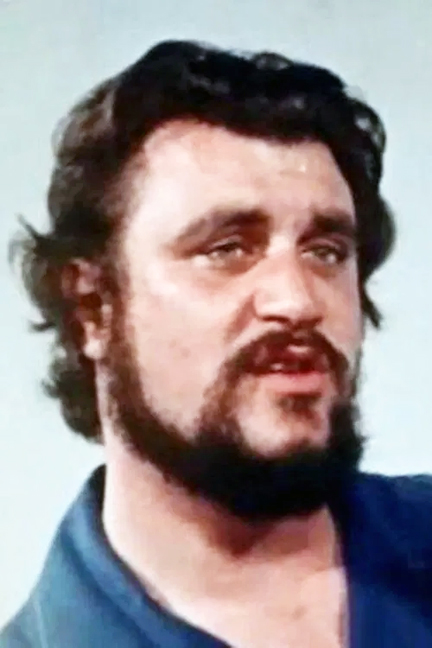 Reb Sawitz
What were your impressions of Reb?
He was a nice guy, very professional. He was the biggest representative in the adult performer field at the time, and he got us tons of work. He said that we were special because we were an attractive couple with no tattoos!
He secured jobs for us with the best photographers in the field at the time, like Paul Johnson, who always made me feel prettier than I really was (laughs). We’d work with him when we were in the San Francisco area.
When was this?
Late 1960s.
Did you have any reservations about nude modeling?
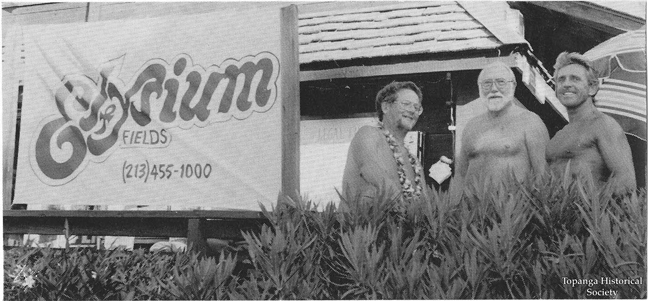
We’d joined a nudist camp called Elysium Fields and attended several swing parties, so being naked had become kind of second nature to me. We were young, and, you know… who cares? (laughs)
Was the money good?
Yes – we started making a lot just modeling for these magazines. We actually set up a company called Modern Art Productions when we started doing the X-rated magazine spreads and later the films.
Did you enjoy modeling?
I was a bit self-conscious at first and I wasn’t a great model. But like I said, we were a couple with no tattoos, so we were in demand and got lots of work.
I never paid too much attention to the photos and saw them as a means to an end – a way to make good money.
Were you doing any other work at the time?
The money in the adult work was good enough that Richard and I started doing that full-time. We got a writing gig out of the modeling too.
How did that come about?
We became friends with the owner of Greenleaf Publications which put out a lot of sex books. They were looking for somebody to write the next book they had in mind, so they asked us. Richard delegated the job to me because he was busy trying to start making films of his own. So I wound up writing ‘Marriage Manual for Swingers’. Richard’s name was on the book’s jacket as the author. This was before I became Rainbow Robbins.
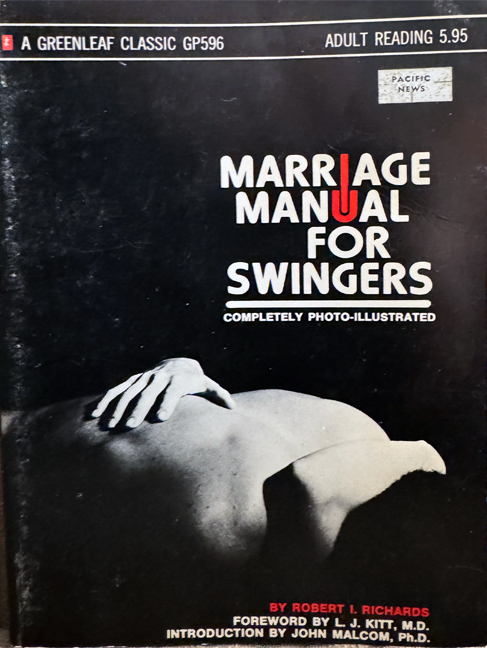
Why didn’t you put your name on the book if you wrote it?
I don’t think we ever even told Greenleaf that I wrote it instead of Richard. He didn’t think it was something they needed to know as he was the one they hired… and I was just a woman.
Did your families know about your adult work?
Richard’s family knew and understood. I asked him not to tell my family, but of course, he didn’t listen – he thought it was such a great thing that we were doing and he wasn’t shy about it. My family, being strict Irish Catholics, were appalled. Over the years they became more understanding about it.
How did you go from nude modeling to adult films?
Reb told us we would make more money if we moved into films. And like I said, Richard was keen.
Were there any more reservations about doing films compared to the magazine work?
Nope, it was all the same thing to us. So we made a few films as actors. I don’t know if I’ve ever known the titles of those.
How did you come to use the name Rainbow Robbins?
We had a receptionist in our office named Rainbow Green. We decided that her name was kind of cute, so we just changed it slightly to Rainbow Robbins. It was Richard’s idea for me to use that name.
One of the films where you had a small acting part was the 1971 movie, Pinocchio, directed by Corey Allen. Do you remember much about that?
I barely remember that one. I was just an extra.
It was around then that we got an investor who put up enough money for us to make our own movie.
Was Richard very persuasive? You said he had started in sales…
Richard was charming and convincing, but the main reason he was able to get financial backing without having direct hands-on filmmaking experience was his vision. He could see in his mind’s eye every scene of every film that he wrote, produced, and/or directed. Then, he’d verbalize all of it to the investor and really pitch it effectively.
We used to call him ‘the silver-tongued devil’ because he could talk, as they say, a dog off the back of a meat wagon.
How difficult was it for you and Richard to move from performing in films to actually making them?
Well, we didn’t have any experience producing or directing when we started making films (laughs) but I don’t remember any particular problems – we just kind of fell right into the rhythm of it.
This is where Richard’s ambition came into play. He just decided, “I don’t want to just be in other people’s films, I want to make my own.” And he didn’t just want to make adult films. He also wanted to get into low-budget legit movies.
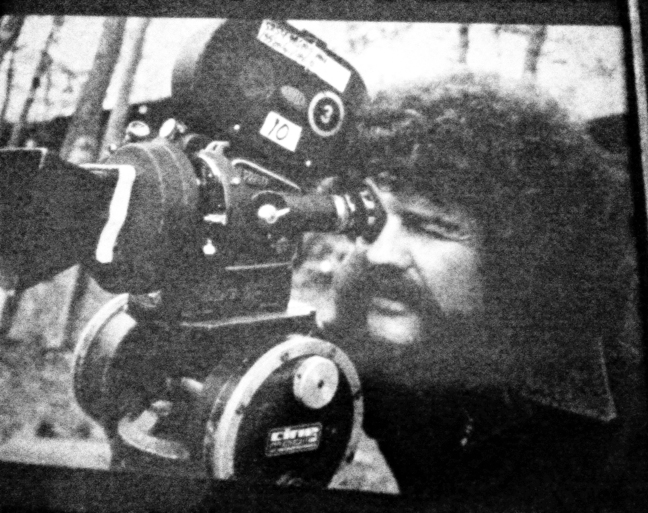 Richard Robinson
What motivated him: was he interested in the financial angle, the creative side, or was it about control?
Probably all three, but money was definitely near the top. We were already doing well modeling for the magazines and performing in other people’s movies – well enough to buy a house in Agoura Hills. But there was a lot more money for you if you made the movies yourself.
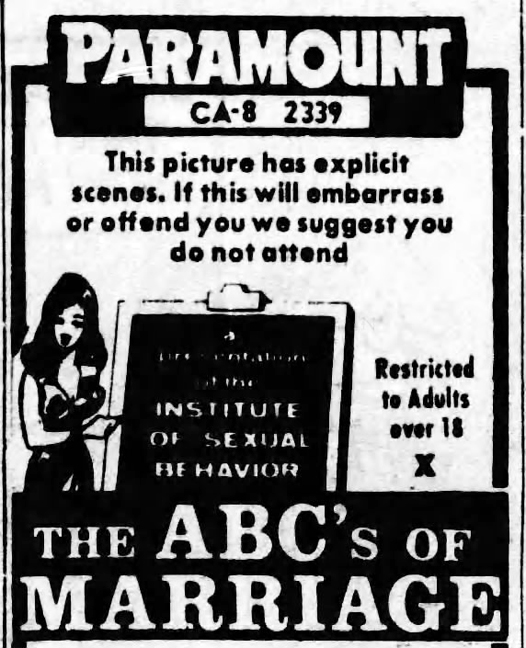
The first film was titled The ABC’s of Marriage (1970) – how much do you remember about that?
I only vaguely remember it. I’m pretty sure it was a hardcore film. I also remember that we advertised it as being presented by ‘The Keaton Marital Institute’ – which was just made up.
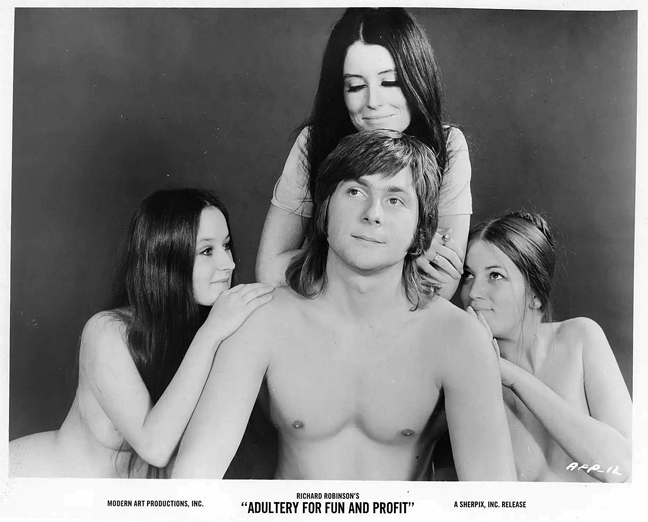
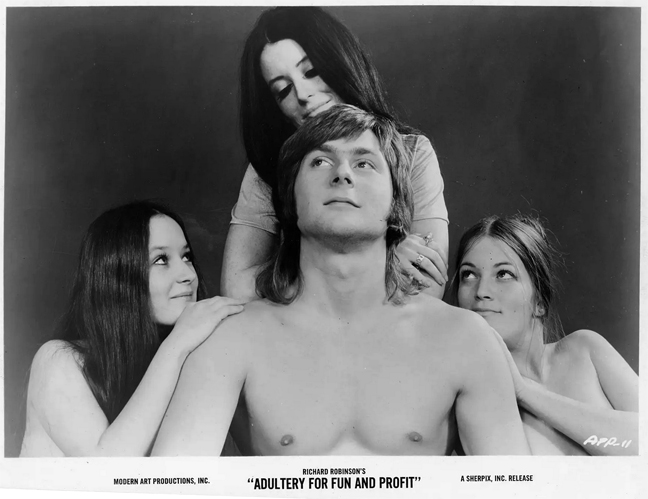
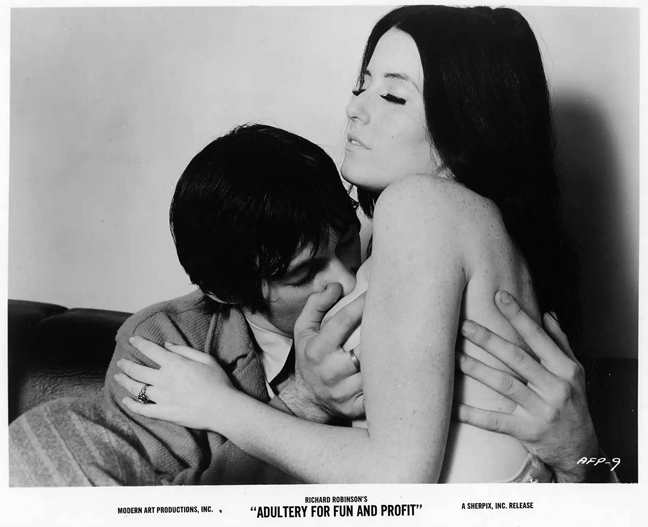
The next film was Adultery for Fun & Profit (1971) – who came up with the plot? And is it just a coincidence that the male lead is named Richard?
Ha! Yes, it was just a coincidence because somebody else wrote the film and therefore named the lead. We made it with a super-low budget. We shot it in the Northridge neighborhood of L.A.
Ah – I thought the writer, listed as E.E. Patchen, was you or Richard using a pseudonym…
No – we weren’t doing any writing yet. We never met the writer – I can’t remember who passed that screenplay on to us.
How did you connect with the cast and crew for ‘Adultery’ – was that all Reb?
I think Reb helped initially. In the beginning, when we started making films ourselves, he got us all the talent and handled all the logistics for us. Later on, when we had our own company, we took over did it all.
But for ‘Adultery’ somebody told us about David Worth, who was a talented cinematographer, and we hired him. He was instrumental in helping us put together the rest of the crew from people he knew.
David went on to have quite a prolific career, including working with Clint Eastwood in more recent years…
Really? I didn’t know that. But he was a really sweet guy; really easy to get along with. Richard often said he’d never have made it without David, and that David was a real talent. And that’s coming from Richard who was really creative.
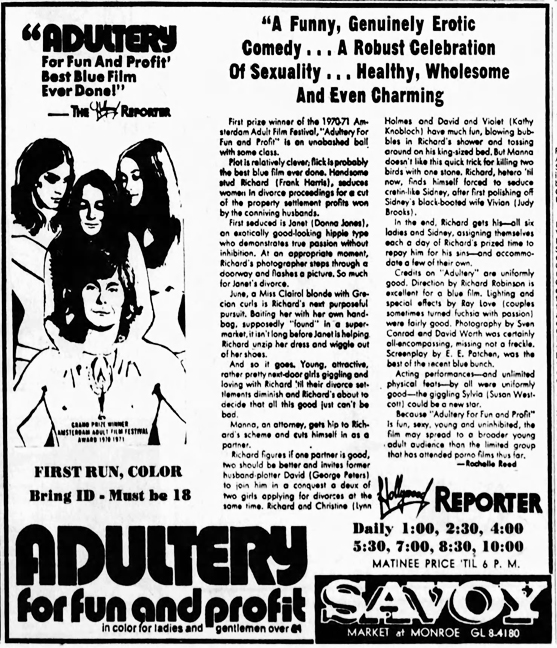
‘Adultery’ was well reviewed – and it won first prize in the 1970-1971 Amsterdam Adult Film Festival. Did that open doors for you?
Absolutely. Richard seemed to go from being just another pretty face to being a well-respected name in the adult film field after that.
Rainbow Robbins in ‘Adultery for Fun & Profit’
Apart from appearing in these early films, you worked closely with Richard on the production side. How did that work?
He needed somebody to help him do everything… and he had me. I also wound up doing all the writing on the screenplays.
How would you write the scripts?
Richard came up with the ideas, the vision, and the visuals, and then he’d describe the film that he had in his mind. I would go away and put it down on paper. He described it all so vividly, so it wasn’t difficult. That was a real talent, and it was very unusual. It was a gift that I never had – even though I was the writer.
I also learned to type pretty fast (laughs).
Did you and Richard have an artistic vision for the type of film you wanted to make?
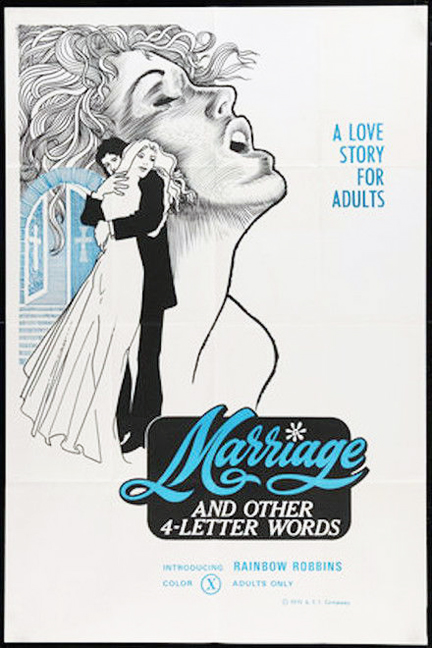
Richard actually believed he could change the film industry one film at a time. Make each one a little bit more creative, a little more real. And I think he really did that. He definitely did that on Marriage and Other Four Letter Words (1974). Each film had a story and an actual screenplay. And nice locations – Richard always used attractive places to shoot. One of those locations was our house – we shot ‘Marriage and Other Four Letter Words’ there.
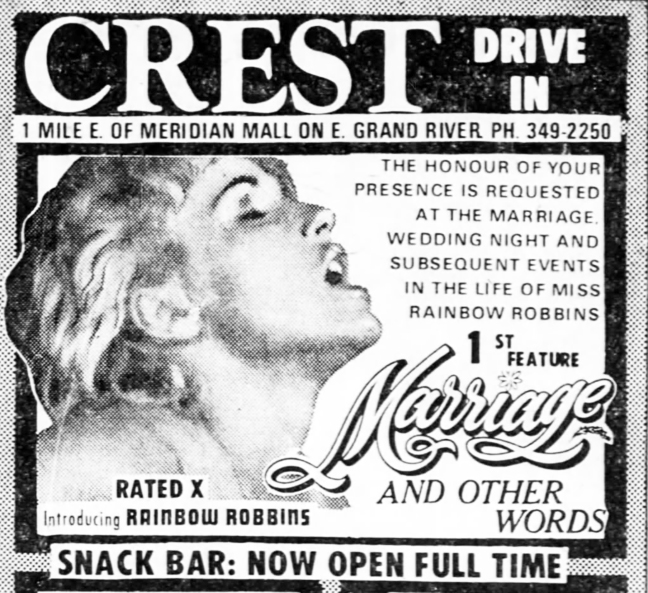
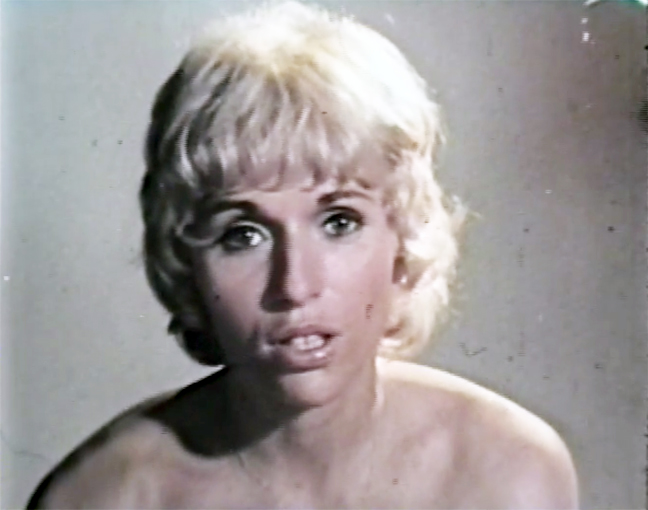 Rainbow Robbins, ‘Marriage and Other Four-Letter Words’
On the early adult films, how conscious were you both that the legality hadn’t quite been figured out, and you were making films that you might get busted for?
It didn’t matter too much. We were pretty fearless back then. We thought nothing would happen to us, even when we heard of someone else getting busted.
Later at the premiere of ‘Adultery for Fun & Profit,’ the cops did show up in force… but they just asked us a few questions, and then they left.
You worked with a number of the frequent performers of the early years – people like Candy Samples, John Dullaghan, Sandy Dempsey, and Keith Ericksen. Do you remember any of the actors you worked with?
No, not really. There was always a distance between filmmakers and actors. I only have vague memories of some of them.
Did you always tend to have premieres for your films?
We did, yes. Either we or the distributor would pay for the event.
Our staff at our company, Modern Art Productions, would do most of the work for these parties. We’d invite the whole cast and crew, and have them invite whomever they wanted to. They usually brought their boyfriends, girlfriends, or spouses, and sometimes their entire family! (laughs).
We also sent invitations to members of the press and actors and actresses we hoped to use in our future films. James Bacon, who was an actor in our Westerns and an entertainment reporter for the Herald Examiner, came to several.
Did Lou Sher’s company, Sherpix, distribute some of your films?
Yes he did. He first worked with us on ‘Adultery.’ He was an interesting man.
How so?
Louie was very humble and unassuming for such a wealthy man. The first time I met him was when he came into our office. I was sitting at our receptionist’s desk as she was out sick that day, and Lou came in looking disheveled, not very well-dressed, and his fly was unzipped. I didn’t know who he was, so I told him Richard wasn’t in. A white lie, but he didn’t have an appointment and looked kind of strange, so I wanted to get rid of him
Then he told me who he was… so I picked up the phone and pretended to make a call on the intercom and got Richard to come in the back door!
How did Lou get involved with you?
After meeting with Richard, Louie agreed to fund our next film. But when he left and got into our building elevator, he started chatting with a man who said that his brother’s sister-in-law’s father – or someone like that! – had just invested in a XXX adult film and lost his ass. Louie called us when he got home and said he wanted to back out of the deal. Of course, Richard smooth-talked him, assuring him that this film wouldn’t lose money, and Louie relented. So he was back to being our executive producer on ‘Adultery for Fun & Profit.’
Did Lou fund the two Westerns you and Richard made?
Yes. The first one we made – Bloody Trail (1972) – we originally called ‘White Justice’. I think a distributor changed the name when they bought the rights from another company that went under. In those days, a lot of companies would get hold of a film and change the name and hope that people thought it was a new film.
Then we made To Hell You Preach (1972). It started out called ‘The Preacher’ but then a TV series came out called “The Preacher,” so we changed the name.
Lou was pretty good about funding films, especially if they were straight movies. Lou wanted to get into regular films, not just X-rated movies.
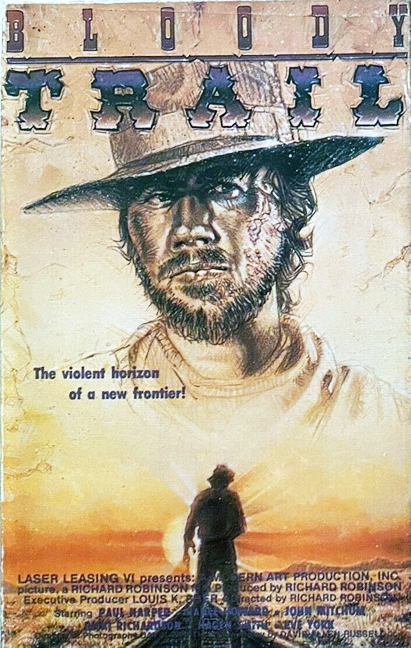
What do you remember about Hagen Smith, who helped write and starred in both of the westerns?
Hagen was a talented guy. Richard appreciated the fact that he could write and act… and was also affordable for our low-budget westerns.
Hagen was quirky as well. When we were shooting “The Preacher”, he and his girlfriend came down with jaundice, leading us to believe that perhaps they had hepatitis. The entire cast and crew got gamma globulin shots, which is never any fun. It turned out that they just had been taking too many vitamins, and that caused the jaundice symptoms. Crisis averted, and Hagen was apologetic about the whole incident.
How did Richard make the pivot to making these western films?
It was pretty easy since he was already in bed with Lou Sher and he’d had no problem talking Louie into doing them. Then after the first western, he got an agent. That was easy too because more people had heard of Richard by that point. In fact, Richard just walked into the offices of Film Artists Management Enterprises (FAME) one day – they had an office on Sunset Blvd – and told them he was looking for an agent. Apparently, that’s how Sylvester Stallone became one of their clients too!
How was making the westerns different from making adult films?
The making of the films themselves really wasn’t much different. But with mainstream films, the plot, acting, dialogue, and scenery are much more important – you don’t have all that hot sexual action to distract the viewers!
Who stands out for you from those early days?
Richard Mazzola was a really nice guy. He did some work with us on the adult films and well as sound work later on Poor Pretty Eddie (1975).
Mazzola’s brother, Anthony, became assistant director and production manager on two of our films, and his other brother, Gene, worked for us as a bookkeeper. It was a family affair – the whole family was nice.
Did you enjoy working on the films as much as Richard did?
Richard was crazier about it than I was, but I enjoyed it. I mean, mostly because we met a lot of great people and we made a lot of money. Life was good.
We did everything together: Richard was always producer and director, and I mostly did script supervision and occasional performing.
How did ‘Is There Sex After Marriage’ come about? Richard is credited as the writer.
It was originally written by some guys in the legit industry who worked on mainstream TV shows. They didn’t want their names on it, they just wanted the money. So Richard re-wrote a few parts of it, and they had him put his name on it.
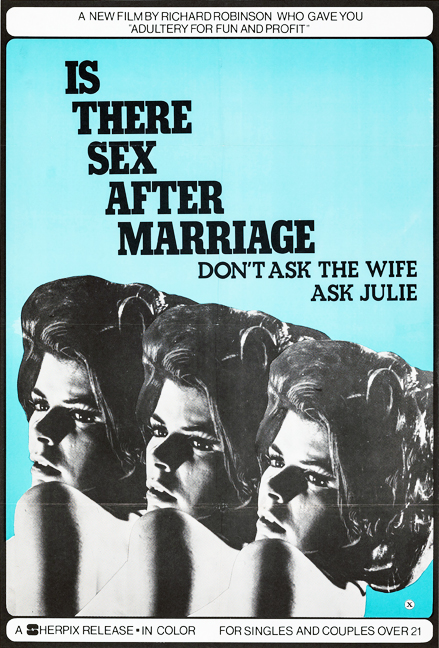
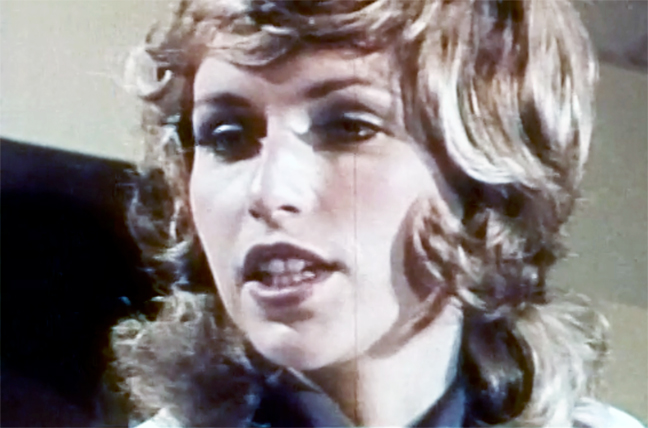 Rainbow Robbins, ‘Is there Sex After Marriage’
You went on to star in ‘Marriage and Other Four Letter Words’…
Yes, because the girl we hired was busted on another film set.
How was it being the lead?
That film was a lot of work, but it was a good experience. On set, we were all just one big happy family, and the crew treated me like a sister. They respected Richard and treated me with respect, too. They made me feel comfortable in my own skin – and helped me to look better for the camera!
Like how?
I remember one scene where they gaffer-taped my back for a close-up so that my stretch marks from having a baby so young wouldn’t show up on camera. David’s always creative camera-work did the rest. The cast and crew were all such great guys and girls. And it was a great ego trip, I can’t deny that.
Did you eventually stop making adult films because you were deliberately trying to pivot to just making mainstream films?
Yes. Richard always wanted to be a legit filmmaker and he especially wanted to make Westerns. One of his proudest moments was when he was invited to Gene Autry’s office to have lunch and screen his film ‘To Hell You Preach.’ Gene said he loved the movie and that made Richard so happy.
After ‘Marriage and Other Four Letter Words,’ you and Richard went on to make Poor Pretty Eddie (1975) with Shelley Winters, who was obviously a big name. How did you make the transition?
We had a good friend named Leon Walters who worked for Mike Thevis, the porn king of Atlanta. Thevis was a big figure in the industry. Leon introduced us to Mike, and Mike wound up funding ‘Poor Pretty Eddie’ because Mike Thevis – like everybody else – wanted to get into legit films.
What was your experience with Thevis like?
They say he killed a lot of people. He certainly threatened a lot of people. He ended up in prison – then escaped, but was stupid enough to get caught again when he went to a bank in person to withdraw money… and they picked him up again.
But when it came to ‘Poor Pretty Eddie,’ he apparently wanted to be legit – so he funded our film. I had to work directly with Mike because I acted as location auditor for the movie – which meant I was stuck with all the budgetary crap. And, yeah, he threatened me too, just like he threatened a lot of people.
He was quite a character. He had a gorgeous wife… a beautiful house too.
How did Shelley Winters get involved? She’d been in ‘The Poseidon Adventure’ (1972) just a few years earlier, and that film had been a huge hit…
Richard’s agent helped us with that – he contacted the stars’ agents and negotiated their contracts. He showed them the script, offered them money, and the deal was done. It was simple.
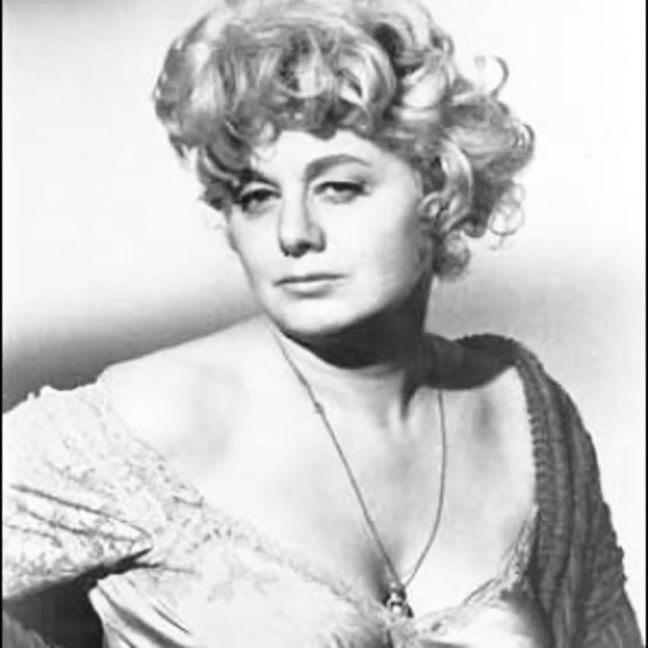 Shelly Winters
Richard and I became friends with some of the actors’ agents. One of them, David Wardlow, invited us to Vegas to see his client Wayne Newton.
Then there was Mike Greenfield – friends all called Greenie – who invited us to his condo in Palm Springs many weekends for some great parties that we helped him organize. We almost lost our standing with him when Richard thought it would be funny to put bubble bath in Greenie’s jacuzzi which cause a huge mess… but luckily, we were forgiven. We spent a lot of time nude sunbathing with friends on the rooftop deck of his condo.
And David Worth worked with you again on ‘Poor Pretty Eddie’?
Yes. By that time, we were living in the Bahamas on our yacht, and David Worth re-entered the scene. Much later on, he wrote some nasty things about Richard online. I thought they’d been really close, but I guess not.
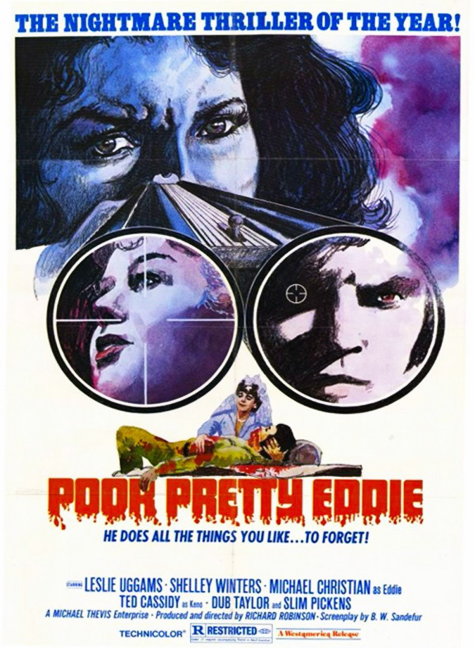
Did you do well with the film?
Well, we certainly didn’t make anything off of it. I don’t know if it did well or not, to be honest with you. The only times we made money were when we wrote, produced, and directed the films. We took a salary on all the movies we made – and we paid ourselves pretty well.
Richard actually re-wrote the screenplay for ‘Poor Pretty Eddie’ that B.W. Sandifer had written.
You mentioned James Bacon before – who acted in several of your films and today is often remembered as being the only actor to appear in all five films in the original ‘Planet of the Apes’ series, as well as receiving his own star on the Hollywood Walk of Fame for his work as a Hollywood columnist. He appeared in ‘Poor Pretty Eddie’…
Yes. And he wrote bestselling book ‘Made in Hollywood’ in 1977 and he mentioned us in it.
We had a wrap party at the end of the shoot for the cast and crew – and he said that he had to go all the way to Athens, Georgia for it to experience to a real Hollywood party! That was fun. I remember a food fight broke out at that party after Shelley Winters smashed a piece of cake on Leslie Uggams’ face.
At the premiere, our leading man, Michael Christian, brought Mae West – it was such a pleasure to meet her!
Richard is credited as a writer on Kingdom of the Spiders (1977) which is now a cult film – what do you remember about that?
A couple of producers named Igo Kantor and Jeffrey M. Sneller sent the story idea for that film to Richard’s agent Craig, and Craig signed Richard up to write the screenplay. Craig also brought another writer onto the project, something that the agency often did to make more money.
‘Kingdom’ was released in 1977, starring William Shatner, and it did fairly well. Richard was later hired to write the sequel, ‘Kingdom of the Spiders II,’ for Cannon Pictures but they went bankrupt while that film was in development.
Richard became a writer on the cult film ‘Piranha’ (1978) – how did that opportunity come about?
New World Pictures Senior Vice President of Production – a guy named Jeff Schechtman – approached Richard’s agent Craig Rumar looking for a writer for the film. The screenplay was being written for a producer named Chako van Leeuwen, who owned the rights to the story. Craig immediately thought of Richard and so Richard went on the write the screenplay.
As Richard was writing the script, something went wrong among all of the parties and he didn’t get paid in full, so he ended up owning the rights. But then things got complicated. Craig was working on a new contract with New World but there was some bad blood between New World and Jeff Schectman by that point, so New World would only do the deal if Jeff wasn’t included in the package. Thinking of Jeff as a friend, Richard refused that deal, but somehow this ultimately led to Jeff becoming a producer on the project, not Richard, as originally planned. In the end, Craig got a deal for Richard where he was paid outright for the screenplay and would receive some healthy profit participation points on the back end.
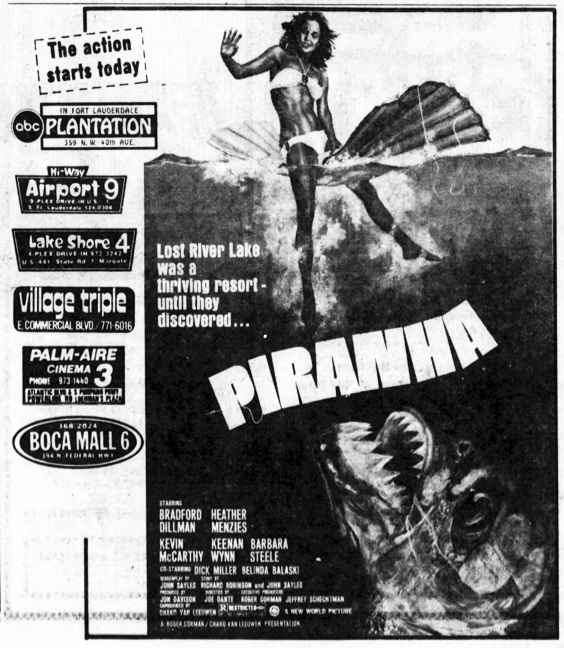
Did Richard reap any benefits from that arrangement and the success of Piranha?
No. The points never materialized. Craig said there was nothing there to get paid out on but we later heard that Craig had bragged to friends about a $150,000 check he received from those points after we were out of the picture.
Outta sight, outta mind, I guess.
Richard developed a drinking problem during these years – how did that impact his work and your relationship?
Richard began drinking more as the 1970s wore on, but for many years he was what we would now call a functioning alcoholic.
Richard’s father and his grandfather were both alcoholics, and so he inherited it. His mother, my mother-in-law, warned me from the first day I married him that it was going to happen to him, but, being the young idiot I was, I didn’t believe her. My parents had been social drinkers all my life – they always would have a martini on the weekend or whatever. So that was the extent of my understanding of alcohol.
Going for drinks with friends became all too commonplace and seemed to be an escape for him. He could still write with the best of them, and his directing only suffered a little bit. Foolishly, I still thought that his drinking was a social thing and he would get over it – in fact, I drank with him much of the time.
Once he started doing mainstream films though, he felt more pressure to do well, and his drinking got worse. Even though Richard was so creative, he always doubted himself. He told me that when he was young his father said he wasn’t talented – I think that weighed heavily on Richard and ultimately killed his confidence.
At a certain point it became more obvious that alcohol was a problem. Richard’s agent actually told me that I should leave Richard while I still had my good looks. But I always kept hoping that he would get help and recover. Sadly, he never did get any help.
*
3. Rainbow Robbins: After Adult Films
After ‘Piranha’ in 1970s, your work on films began to stall. What happened?
There was a writer’s strike that meant work began to dry up fast. Not only were we unable to keep making films, but we began to run out of money. We fell behind on our house payments and couldn’t catch up so we decided to sell the house. We had to.
During that time, a neighbor across the street had won a little sailboat from Kool Cigarettes. He loaned it to us, we took it out on the lake in West Lake, and decided we loved sailing. We thought rather than buy another house in California where real estate was starting to skyrocket, we should get a boat and live on it. It was kind of silly…all because we’d taken this small sailboat out once! But that’s what we thought.
We were good friends with Jim Mitchum, Robert Mitchum’s son. In fact, Jim had lived with us for a while after he split up with his wife. We discussed various film projects with Jim for a while.
Anyway, he introduced us to a yacht broker in Marina del Rey who was connected with a yacht company in Fort Lauderdale. We wound up going to Fort Lauderdale, picking up a boat, and refurbishing it. Since we were so close already at that point, we decided the place to be was the Bahamas, so we went to live in the Bahamas.
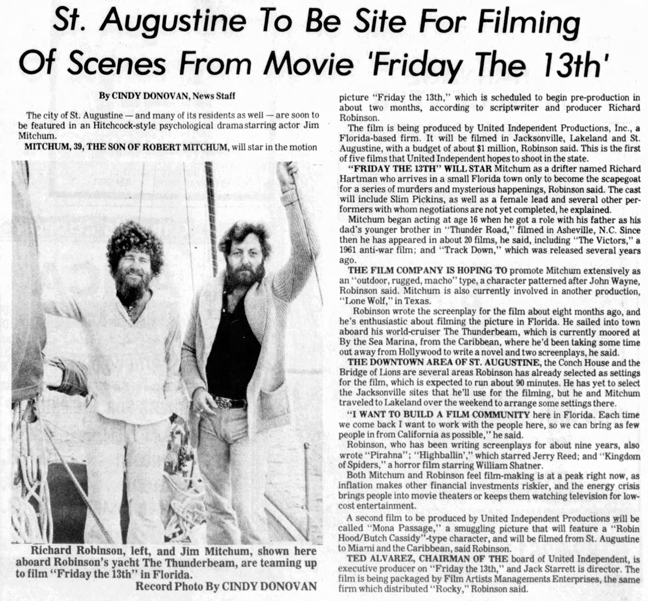
So Richard stopped writing screenplays at that point?
Well he wrote a few other scripts, but they didn’t go anywhere. One was a thriller about the swine flu and was optioned by a producer named Sidney Beckerman – that money kept us going for a while. But the film never wound up going anywhere. In their final meeting about the project, Sidney told Richard that the Feds had come to him and told him to shelve the project or the IRS would make his life a living hell. So he dropped the project, and that was that.
We also wrote a script with our friend, the late Anthony Herrera, who was on ‘As the World Turns’ for many years as James Stembeck. We never did anything with those scripts, though – they just ended up on the shelf.
And we were paid to write a paperback for Bantam Books based on a film we wrote called Highballin’ (1978) with Peter Fonda and Jerry Reed.
So you got to write a film that starred Peter Fonda?
Yes we did – and we were going to write and make another one with Peter but the financing fell through. We were supposed to get the money from a financier from Kuwait but then they learned that Shelley Winters had donated some of her ‘Poor Pretty Eddie’ salary to an Israeli cause. So the funding for that new movie with Peter Fonda disappeared…
What did you do for work at that point?
We didn’t work much when we were in the Bahamas – nobody does. We’d made good money when we sold our house in California so we were living off the proceeds. We figured we’d get back into writing for films when the strike let up.
I was eager to get back to writing but Richard got lazy. I used to fight with him when we got the opportunity to write something because he’d rather hang out on the beach or at the local bar.
How long did you stay in the Bahamas?
About seven years, and then we came back to live in Florida – first in St. Augustine, then Winter Park near Orlando. We started a new film company in Orlando called Florida International Film Corp.
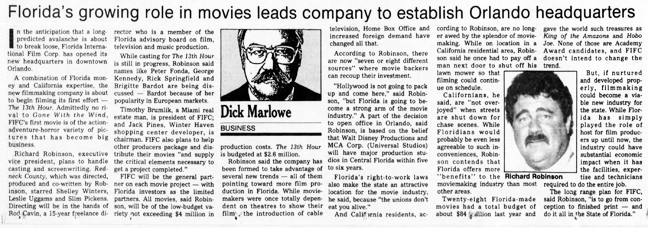
What were your plans for that company?
The plan was to make several films, the first being from a screenplay that Richard wrote called ‘Mariah’ – as in the popular song from the 1950s ‘They Call the Wind Maria.’ That film never got off the ground due to more funding issues.
What did you and Richard do professionally after the movies?
We eventually moved back to California when Richard was offered a job working for a film distribution company called Lone Star Pictures. This was around 1981, and he was putting together scripts and packages for future productions, but the company started faltering before any of them came to fruition.
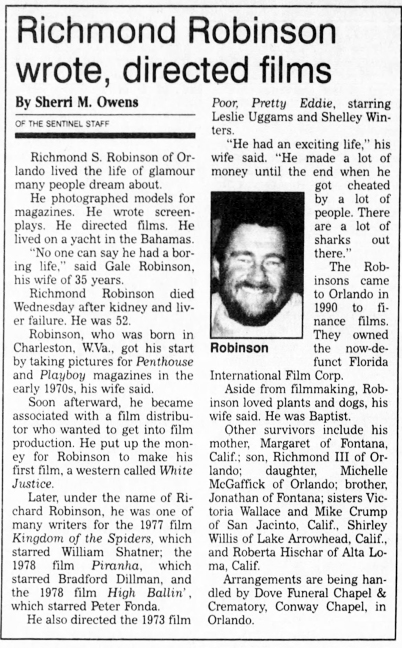
Richard died in 1998 – did that come as a surprise to you?
Yes, even though he hadn’t really been well for a while. I finally talked him into going to the ER as I thought maybe they could help him get well. I was devastated when I found out that he had signed a DNR order. The hospital took good care of him, gave him morphine, and a private room. He slipped away a few days later.
What did you do after Richard’s passing?
I moved back to California to be near family, especially my mother who had ALS. I sold as much of our stuff as we could, packed up a U-Haul truck and our two dogs, and headed for the west coast.
When I got settled in San Jacinto, CA, I applied for several office jobs, but they were far from where I lived and would’ve required a long commute. I finally saw an ad in the paper for a new loan company in downtown Hemet called California Budget Finance, a few minutes from our house. I interviewed with the area manager, and he told me about the job and also the high interest rate they charged for their payday loans. I asked him if that was “userage.” That question seemed to impress him, and he gave me the job. Before long, my store had one of the best records for making and collecting loans, and we received several awards for our work.
I eventually decided to start my own payday loan company. I cashed in my 401k and my very generous father loaned me some money, and I opened my first store. I named it Money & More and used the little M&M guys on our sign and ads for recognition value, but with a “$” on their chests instead of an “m”. I gave new customers a tube of mini-M&M’s and refilled it every time they came in to renew their loan.
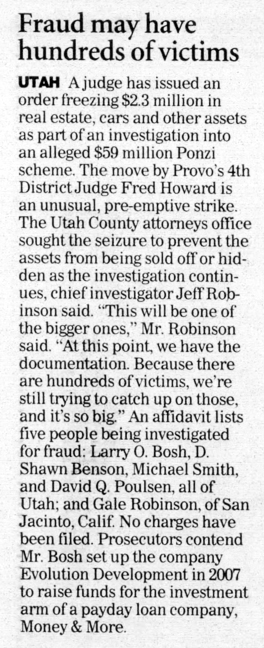
We became very popular for fast, friendly loans, and good customer service. I added tax preparation, credit repair, and retail to our list of offerings. I opened three more stores, a large main office, and a website that made online loans. I built it into a million-dollar company, but it all came crashing down because I got into business with some greedy investors from Utah. These investors were taking other people’s money, putting it into companies like mine, and only paying the individual investors a small percentage of what they were entitled to.
Eventually these investors were indicted and unfortunately I got caught up with them. I moved to Florida from California but then I was charged with money laundering and securities fraud, and extradited from Florida to Utah. The charges were eventually reduced to unlicensed securities when all the facts came to light. One of the Utah investors even admitted in a newspaper interview that he was laundering money for the cartels!
So eventually, all I got was probation. But by that point I had lost everything and was stuck in Utah. That was about 15 years ago.
When did writing become a focus for you and why are you attracted to it?
I was stuck in Utah and needed extra income to supplement my social security, so I focused back on my writing. I started writing web pages, product descriptions, real estate reviews, press releases… that kind of thing. But nowadays freelance writing has really kind of gone on the toilet because of AI. Everybody figures why pay a writer when you can do it yourself with AI.
Ever since my reversal of fortune, my main focus has been on survival for my son and me. I really hope I can find ways to make more money so we can buy a car and move out of our studio apartment into a house.
What were your best memories from your time in film?
Going on location, and the cast and crew who were like an extended family. My biggest regret is not staying in touch with any of them over the years.
And do you miss Richard?
Every day. Especially when I say grace and thank God for Richard being in our lives and always trying so hard and doing the best he could for his family. After Richard died, I remember just before his mother passed away, she said he came to her wearing his white suit and told her he was OK and was doing good works in Heaven. That gave me comfort. I know they’re together now in Heaven.
 Richard Robinson
*

Awesome Article Keep Up Good Work